
Financial instruments: the money you are owed and the money you owe.
The challenge
ECL is forward-looking, complex and always changing.
Manual processes, siloed data and batch calculations create inconsistency, delay and model risk.
Fragmented processes
Disconnected systems and spreadsheets lead to rework, inconsistencies and control gaps.
Forward-looking by nature
Macroeconomic shifts and customer behaviour change continuously, not just at reporting dates.
Transparency under pressure
Regulators and auditors expect clear, repeatable models and full audit traceability.
The IFRS 9 chain
One controlled path from instrument to disclosure.
A consistent, auditable process that connects data, judgement and calculations to reliable outcomes.
- 1
Financial instruments
Capture and maintain a complete instrument record.
- 2
Data & validation
Ensure data quality, completeness and consistency.
- 3
Classification
Determine business model and cash flow characteristics.
- 4
Measurement
Measure at amortised cost or fair value.
- 5
Impairment (ECL)
Estimate expected credit losses forward-looking.
- 6
Stage assessment
Assess significant increase in credit risk.
- 7
Aggregation & reconciliation
Aggregate results and reconcile across systems.
- 8
Reporting & disclosures
Produce IFRS 9 reports and disclosures.
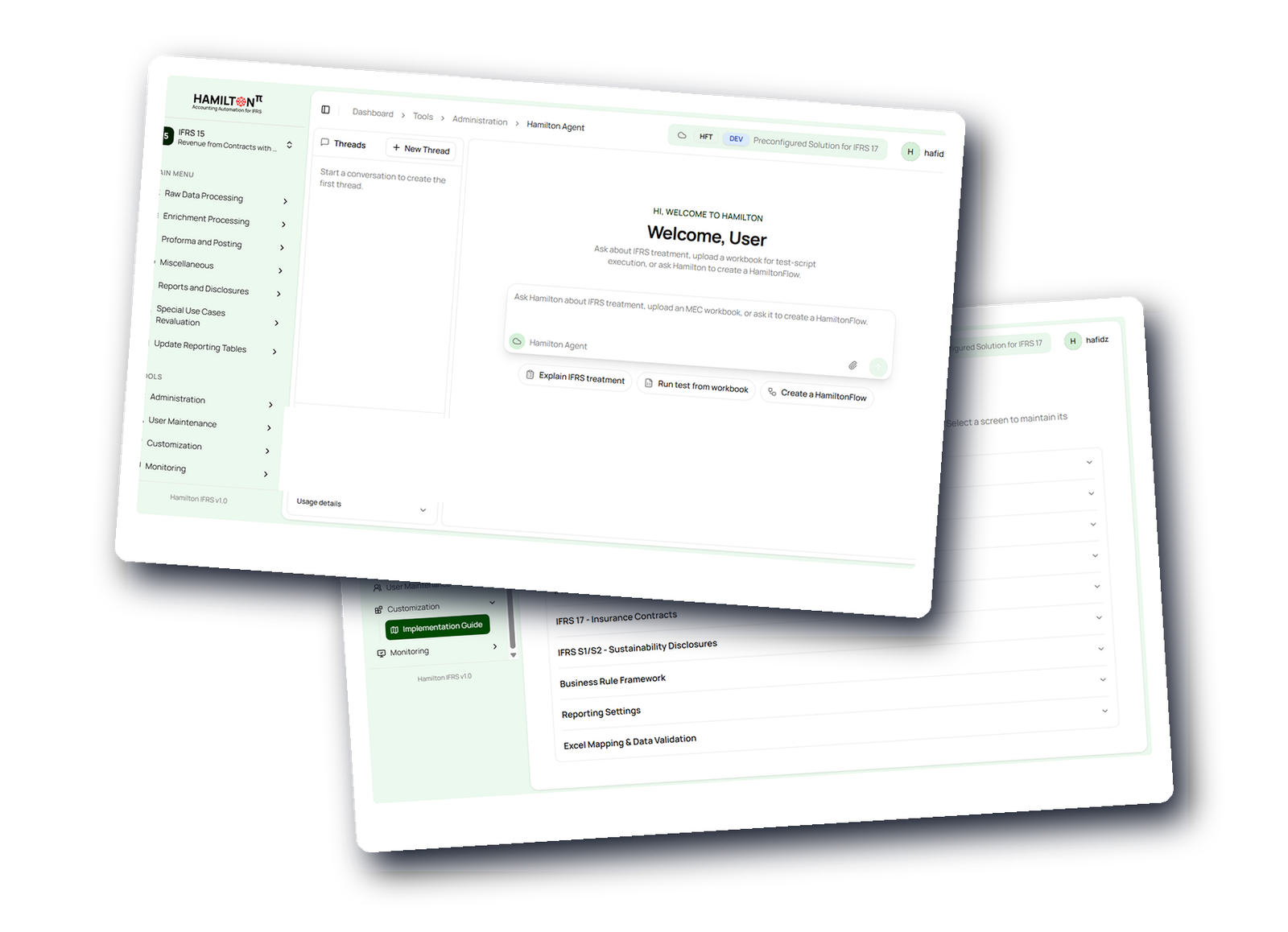
What Hamilton CEM handles
Classification
Rules-driven classification across business models and cash flow tests.
Measurement
Amortised cost, fair value and EIR calculations that stay up to date.
Impairment (ECL)
Forward-looking ECL models with scenario analysis and macro overlays.
Risk layers
Stage assessment, overlays and expert judgement with traceability.
Lifecycle
Continuous monitoring of risk, exposures and model performance.
Expected vs actual
Expected credit loss vs actual credit loss
Hamilton CEM models expected credit loss as new data, risk signals and forecasts arrive. This reduces surprises, strengthens governance and supports timely decisions.
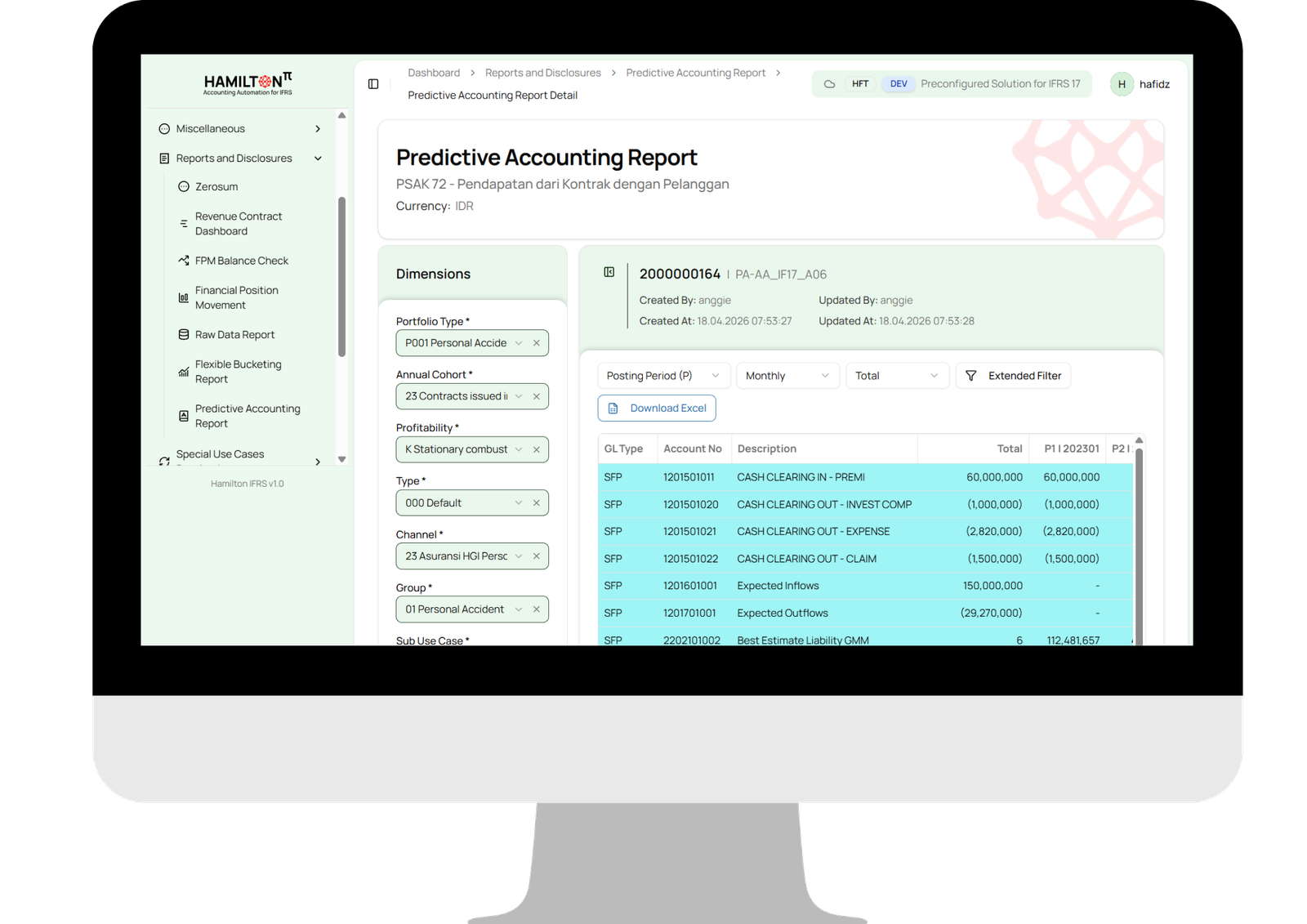
Built for industries where financial instruments are material
Built for industries where financial complexity is high.
Make contract economics visible.
Talk to us about bringing predictive accounting to your contract lifecycle.
Explore the standards